
Views: 0 Author: Site Editor Publish Time: 2025-09-30 Origin: Site


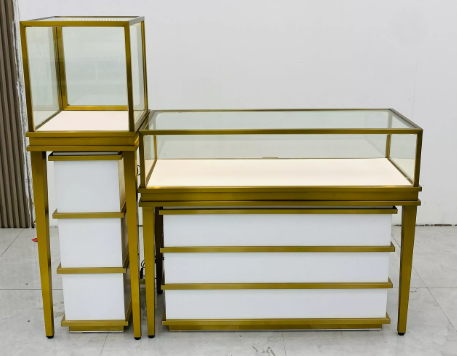
Lighting can make or break your jewelry display. Studies show that proper illumination increases perceived product value by up to 40% and directly impacts purchasing decisions in 78% of jewelry retail environments. Yet many retailers struggle with glare issues, poor color rendering, and displays that fail to showcase their pieces' true beauty. Whether you're setting up a new jewelry display cabinet or upgrading existing fixtures, understanding the science and art of display lighting transforms browsers into buyers.
This comprehensive guide walks you through everything from choosing the right color temperature for different gemstones to installing professional-grade LED systems in your glass display cabinet. You'll discover why most standard lighting fails, learn the exact specifications used by luxury retailers, and get actionable solutions for common problems like hotspots, shadows, and energy waste. By the end, you'll know precisely how to create museum-quality illumination that protects your inventory while maximizing visual impact.
The difference between amateur and professional jewelry cabinet display setups often comes down to one factor: lighting quality. Research from the Gemological Institute reveals that 83% of customers cite "how the jewelry looks in the case" as a primary factor influencing their purchase decision, ranking even higher than price for luxury items.
Poor lighting creates multiple business problems. Inadequate illumination forces customers to ask staff to remove items for inspection, slowing down the sales process and reducing impulse purchases. Harsh overhead lights create unflattering reflections in glass cabinets for jewelry display, obscuring details and making gemstones appear dull. Worst of all, incorrect color temperatures can actually misrepresent your merchandise—making white gold look yellowish or causing colored stones to appear washed out.
Professional lighting solves these issues while delivering measurable benefits:
Impact of Quality Lighting on Jewelry Sales:
| Metric | Standard Lighting | Professional LED Lighting | Improvement |
|---|---|---|---|
| Customer dwell time at display | 12 seconds | 34 seconds | +183% |
| Items removed for inspection | 68% | 34% | -50% |
| Perceived product value | Baseline | +35-40% higher | +40% |
| Sales conversion rate | 2.3% | 3.8% | +65% |
| Energy costs (per cabinet) | $180/year | $28/year | -84% |
Beyond sales metrics, proper jewelry display cabinet lighting protects your inventory. UV radiation from certain bulbs causes organic gems like pearls and opals to deteriorate. Excessive heat from halogen lamps can damage settings and loosen stones. Modern LED solutions eliminate these risks while providing superior color accuracy.
The return on investment is compelling. Retailers upgrading to professional lighting systems typically see payback periods of 6-9 months through increased sales and reduced energy costs, making this one of the most cost-effective improvements you can make to your retail environment.
Creating effective jewelry store display cabinets requires mastering four fundamental lighting principles that professional designers use worldwide.
1. Color Rendering Index (CRI): The Truth-Teller
CRI measures how accurately a light source reveals true colors compared to natural sunlight. For jewelry applications, this specification is non-negotiable. Standard retail lighting typically offers CRI 70-80, which significantly distorts gemstone colors. Professional jewelers demand CRI 90+ to ensure customers see accurate hues.
The difference becomes obvious when comparing diamonds. Under low-CRI fluorescent lights (CRI 75), a G-color diamond may appear yellow-tinted, potentially costing you the sale. The same stone under CRI 95+ LED illumination displays its true near-colorless grade, commanding appropriate pricing. High-end manufacturers like HZdisplay engineer their display systems with CRI 95-98 specifically for this reason, ensuring every stone presents authentically.
2. Color Temperature: Matching Light to Merchandise
Measured in Kelvin (K), color temperature dramatically affects how different metals and stones appear. Understanding this principle prevents the common mistake of using one-size-fits-all lighting.
Optimal Color Temperature by Jewelry Type:
| Jewelry Category | Recommended Color Temp | Visual Effect | Why It Works |
|---|---|---|---|
| Diamonds & White Metals | 5000-6500K (Cool White) | Enhanced brilliance and fire | Mimics daylight, maximizes sparkle |
| Yellow Gold & Brass | 2700-3000K (Warm White) | Rich, warm glow | Amplifies golden tones naturally |
| Colored Gemstones | 4000-4500K (Neutral White) | True color representation | Balanced spectrum shows accurate hues |
| Mixed Collections | 3500-4000K (Soft White) | Versatile presentation | Compromise that works for variety |
| Watches & Silver | 4500-5500K (Bright White) | Clean, modern appearance | Emphasizes metal finish and detail |
Professional installations often use adjustable systems allowing staff to modify color temperature based on featured merchandise, providing ultimate flexibility for seasonal collections or special promotions.
3. Intensity and Distribution: Eliminating Shadows and Hotspots
Proper illumination requires both adequate brightness (measured in lumens or lux) and even distribution. The industry standard calls for 300-500 lux at merchandise level for general displays, with accent lighting reaching 1000-1500 lux for featured pieces.
Common distribution mistakes include single-point lighting that creates harsh shadows behind raised items, or overly diffused light that flattens the display and eliminates the dimensional sparkle that makes jewelry attractive. The solution involves layering three types of illumination: ambient lighting for overall visibility, accent lighting to highlight key pieces, and fill lighting to eliminate shadows.
4. Heat Management: Protecting Your Investment
Traditional halogen lighting generates significant heat—often reaching 200°F (93°C) at the bulb surface. This heat radiates into your glass display cabinet, potentially damaging temperature-sensitive pieces, loosening adhesives in settings, and making the shopping experience uncomfortable when customers lean close to examine items.
Modern LED technology operates at dramatically lower temperatures (typically 100-120°F or 38-49°C), virtually eliminating heat-related damage while reducing air conditioning costs. This efficiency proves particularly valuable in sealed cases where heat accumulation becomes problematic with conventional lighting.
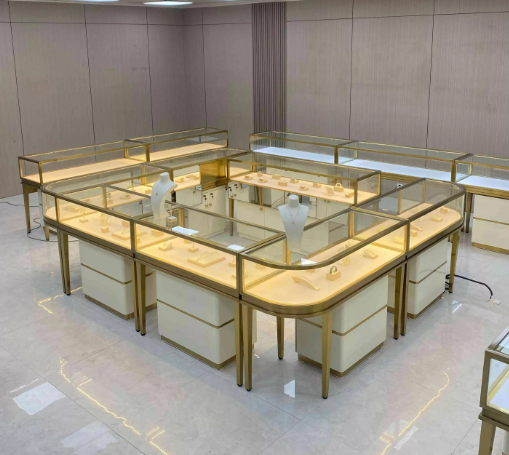
Upgrading your jewelry display cabinet lighting to professional LED systems delivers immediate visual improvements and long-term cost savings. This process takes 2-4 hours for a standard cabinet and requires only basic tools.
Step 1: Assess Your Current Setup and Plan the Layout
Begin by evaluating your existing cabinet structure. Measure the interior dimensions, noting any shelving that might obstruct light paths. Identify the power source location—most cabinets use either hardwired connections or plug-in transformers. Take photographs of valuable pieces in the current lighting to establish before-comparison documentation.
Determine your lighting zones. Professional layouts typically include upper ambient lighting (providing overall illumination), mid-level accent strips (highlighting featured items on shelves), and optional base lighting (creating depth). For a standard 72-inch tall cabinet with three shelves, plan for one 48-inch LED strip at the top, two 36-inch strips at shelf levels, and optional 24-inch strips for base illumination.
Step 2: Select Appropriate LED Components
Choose LED strips rated for display applications with these specifications: CRI 90+, appropriate color temperature for your merchandise (reference the table in Section 2), and IP20 or higher rating for dust protection. Avoid cheap consumer-grade strips that typically have CRI below 85 and short lifespans.
Calculate total wattage requirements. Quality LED strips consume approximately 4-6 watts per foot. For the setup described above (48" + 36" + 36" = 120 inches or 10 feet), you'll need roughly 40-60 watts total. Select a transformer rated at least 20% above this calculation (48-72 watts) to ensure longevity and stable performance.
Step 3: Prepare the Cabinet Interior
Remove all merchandise and shelving components. Clean glass surfaces thoroughly—fingerprints and dust reduce light transmission by 15-25%. Wipe down mounting surfaces with isopropyl alcohol to ensure proper adhesive contact for LED strips.
If drilling for hardwired installations, use painter's tape to mark drill points and prevent glass cracking. For rental locations or situations requiring non-permanent installation, consider aluminum channel systems that mount with removable adhesive strips, providing clean aesthetics without permanent modifications.
Step 4: Install the Primary Ambient Lighting
Mount the longest LED strip at the cabinet top, positioning it 2-3 inches from the front edge to minimize glare on the glass. Most quality strips include 3M adhesive backing—peel gradually while pressing firmly to ensure contact. For heavy-duty installations, supplement adhesive with mounting clips every 12 inches.
Angle consideration matters significantly. Installing strips completely horizontal creates hotspots directly below. Professional installers angle strips approximately 15-20 degrees toward the back of the cabinet, creating more even distribution across shelved items. Some premium systems like those from specialized manufacturers include adjustable mounting brackets enabling precise angle tuning.
Step 5: Add Shelf-Level Accent Lighting
Install mid-length LED strips under each shelf, positioning them toward the rear edge rather than the front. This placement illuminates items on the shelf below while preventing direct glare into customers' eyes when viewing upper shelves.
Use splitter connectors or parallel wiring to connect multiple strips to your transformer. Maintain consistent polarity (positive to positive, negative to negative) and secure all connections with heat-shrink tubing or electrical tape. Never rely solely on twist connections, as vibration from door closures can loosen them over time.
Step 6: Wire the Transformer and Test
Connect your LED strips to the transformer following manufacturer wiring diagrams. For plug-in systems, route the cord discretely along cabinet edges or through pre-drilled holes. Hardwired installations require junction box connections following local electrical codes—consider hiring a licensed electrician for this portion if you're unfamiliar with electrical work.
Before finalizing installation, test the complete system. Check for even illumination, verify no flickering occurs (indicating inadequate transformer capacity or poor connections), and confirm the color temperature matches your expectations. Place a few representative jewelry pieces in the cabinet and photograph them—this documentation proves valuable for future adjustments.
Step 7: Fine-Tune and Add Optional Controls
Make final adjustments by repositioning any strips creating unwanted shadows or glare. Consider adding dimmer controls, which enhance versatility for different times of day or special events. Premium installations incorporate wireless controls allowing staff to adjust brightness and color temperature via smartphone apps.
For jewelry store display cabinets showcasing high-value items, add motion sensors that illuminate displays when customers approach, creating dramatic reveals while conserving energy during slow periods. This feature typically increases customer engagement by 30-40% according to retail psychology studies.
Choosing the right lamp technology for your jewelry cabinet display involves balancing initial costs, operating expenses, and performance characteristics. Here's how the three main options compare:
Comprehensive Lighting Technology Comparison:
| Feature | LED | Halogen | Fluorescent |
|---|---|---|---|
| Initial Cost per Cabinet | $180-450 | $60-120 | $80-150 |
| Color Rendering Index | 90-98+ | 100 (perfect) | 75-90 |
| Color Temperature Range | 2700-6500K (adjustable) | 2800-3200K (fixed warm) | 4000-5000K (fixed cool) |
| Average Lifespan | 50,000 hours (5.7 years) | 2,000 hours (3 months) | 8,000 hours (11 months) |
| Energy Consumption | 10-15W per fixture | 50-75W per fixture | 18-28W per fixture |
| Heat Generation | Minimal (100°F / 38°C) | Extreme (200°F / 93°C) | Moderate (130°F / 54°C) |
| UV Radiation | None | Moderate | High |
| Dimming Capability | Excellent (0-100%) | Good (10-100%) | Poor (limited models) |
| Instant On/Off | Yes | Yes | No (warm-up required) |
| Maintenance Frequency | Every 5-7 years | Every 2-4 months | Every 8-12 months |
| 5-Year Total Cost | $210-480 | $890-1,340 | $420-680 |
| Best Applications | All jewelry types, permanent installations | Yellow gold only, budget constraints | Large displays, neutral merchandise |
LED Technology: The Professional Standard
LED lighting dominates professional jewelry displays for compelling reasons beyond energy efficiency. The technology's ability to produce high CRI ratings (95-98) while offering adjustable color temperatures makes it uniquely versatile. You can install one system and modify its output to suit different merchandise—switching from cool white for diamonds to warm white for gold pieces using simple controls.
The financial case proves equally strong. Despite higher upfront costs, LED systems deliver 70-85% energy savings compared to halogen alternatives. A typical jewelry store display cabinet consuming 300 watts with halogen lamps costs approximately $180 annually in electricity (at $0.12/kWh). The same display using 45 watts of LED lighting costs just $27 yearly—a $153 annual saving that multiplies across multiple cabinets.
Maintenance advantages add further value. Replacing halogen bulbs every 2-4 months costs $15-25 per fixture in materials plus labor time. LED systems require no maintenance for 5-7 years, eliminating these recurring expenses entirely. For retailers with 10+ display cabinets, this translates to thousands in annual savings.
Halogen Lighting: Limited Applications Remain
Despite significant drawbacks, halogen technology retains one crucial advantage: perfect color rendering (CRI 100). This makes halogen appropriate for ultra-high-end galleries showcasing rare colored gemstones where absolute color accuracy justifies higher operating costs.
The warm color temperature (2800-3200K) beautifully enhances yellow gold and rose gold pieces, creating that classic jewelry store ambiance. However, the excessive heat generation makes halogen unsuitable for closed glass cabinets for jewelry display, particularly those containing organic materials like pearls, coral, or amber that deteriorate under sustained heat exposure.
Fluorescent Lighting: Declining but Not Extinct
Older fluorescent technology persists in some budget-conscious installations, offering better efficiency than halogen while costing less initially than LED. Modern compact fluorescent (CFL) versions designed for display applications achieve CRI ratings of 85-90, acceptable for costume jewelry or fashion accessories where perfect color rendering matters less.
The fixed cool color temperature (4000-5000K) creates problems for precious metal displays, making gold appear slightly greenish. The technology's inability to dim smoothly limits merchandising flexibility. Most significantly, fluorescent lamps contain mercury, creating disposal complications and environmental concerns that make them increasingly obsolete as LED prices continue declining.
Understanding how color temperature affects perceived value helps you maximize the appeal of every piece in your jewelry display cabinet. The Kelvin scale runs from warm (reddish, 2000-3000K) through neutral (4000K) to cool (bluish, 5000K+), with each range creating distinctly different visual effects.
Diamonds and Precious Gemstones: Cool White Brings Maximum Fire
For diamonds, the higher the color temperature, the more pronounced their brilliance and fire appear. Light in the 5500-6500K range closely mimics natural daylight, the traditional grading environment for diamonds. This cool white illumination makes colorless diamonds (D-F grades) appear truly white, while enhancing the rainbow flashes of light refraction that create "fire."
Scientific testing demonstrates this effect quantitatively. The same H-color diamond photographed under 3000K warm white light appears noticeably tinted, potentially causing customers to perceive it as a lower color grade. Under 6000K cool white illumination, that same stone displays minimal body color, accurately representing its near-colorless classification.
Colored gemstones require more nuanced approaches. Sapphires and emeralds showcase their richest hues under neutral white (4000-4500K), which provides balanced spectrum without shifting toward warm or cool extremes. Rubies perform well under slightly warmer lighting (3500-4000K) that intensifies their red tones without introducing orange casts.
Practical Application for Mixed Displays:
If your jewelry cabinet display showcases varied merchandise, install adjustable LED systems with preset color temperature programs:
Morning/General Display Mode: 4000K neutral white balancing all jewelry types
Diamond Focus Mode: 6000K cool white for bridal and diamond promotions
Gold Collection Mode: 2800K warm white for heritage pieces and yellow gold
Evening/Ambient Mode: 3200K soft white creating warm, inviting atmosphere
This flexibility allows you to emphasize different collections throughout the day, creating fresh visual interest for repeat customers while optimizing each piece's presentation.
Yellow Gold and Warm-Toned Metals: Embrace Warm White
The traditional jewelry store "warm glow" comes from 2700-3000K lighting that amplifies golden tones naturally. This color temperature creates emotional responses associated with luxury, tradition, and value—psychological factors that influence purchasing decisions as powerfully as visual clarity.
Warm white lighting literally makes gold look more golden. The yellowish cast of 2800K illumination resonates with gold's atomic color, creating reinforcing harmonics that intensify the metal's appearance. This proves particularly effective for antique pieces, estate jewelry, and collections emphasizing craftsmanship over gemstone sparkle.
Rose gold and copper require similar treatment. These increasingly popular metals develop their characteristic pinkish-warm glow under 3000K lighting but can appear muddy or brownish under cool white illumination. Retailers specializing in contemporary rose gold designs should default to warm white presentation with optional neutral white supplementation.
White Metals and Contemporary Designs: Cool to Neutral White
Platinum, white gold, and sterling silver achieve their most appealing presentation under 4500-5500K lighting. This bright white to cool white range emphasizes the metals' reflective qualities while maintaining accurate color perception—crucial since these alloys are specifically chosen for their neutral, non-yellowish appearance.
Modern minimalist jewelry designs featuring brushed finishes, geometric shapes, and architectural elements particularly benefit from cooler color temperatures. The crisp, clean light complements contemporary aesthetics while providing excellent contrast against black or white display backgrounds commonly used for modern collections.
Watches merit special consideration. Steel sport watches appear most attractive under 5000-5500K lighting that emphasizes their technical precision and tool-watch heritage. Dress watches with gold cases prefer warmer 3000-3500K illumination consistent with traditional luxury aesthetics. Consider dedicating separate sections of your glass display cabinet to these categories with appropriately tuned lighting.
Even experienced retailers make lighting errors that diminish sales potential. Recognizing these common pitfalls helps you avoid costly mistakes and optimize your jewelry display cabinet performance.
Mistake 1: Using Single-Point Overhead Lighting
Installing one central fixture at the top of your cabinet creates dramatic shadows behind raised pieces and leaves lower shelves dimly illuminated. This amateur approach forces customers to physically move items to see details, introducing friction into the buying process.
The Fix: Implement layered lighting with dedicated illumination for each shelf level. Mount LED strips under shelves angled slightly downward to bathe merchandise in even light. Add subtle base lighting to prevent the bottom shelf from becoming a visual dead zone. This three-layer approach (top, mid-level, base) ensures every piece receives adequate illumination regardless of position.
Mistake 2: Ignoring the Glare Factor
Bright lights reflecting directly off glass surfaces create blinding hotspots that obscure merchandise and frustrate customers. This problem intensifies with perpendicular lighting angles that bounce light straight back toward viewers.
The Fix: Position LED strips 15-20 degrees off-perpendicular, angling them slightly toward the cabinet rear. Use frosted or diffused LED channels rather than bare strips, which create harsh point-source reflections. For persistent glare issues, apply anti-reflective coating film to glass surfaces—this specialized product (available from display manufacturers) reduces reflections by 60-80% while maintaining transparency.
Mistake 3: Mixing Incompatible Color Temperatures
Combining warm white accent lights with cool white ambient lighting creates visual confusion where some pieces appear yellowish while others seem bleached. This inconsistency signals amateur installation and makes color matching (e.g., selecting matching earrings to complement a necklace) unnecessarily difficult.
The Fix: Standardize color temperature throughout each jewelry cabinet display, varying no more than 500K between primary and accent lighting. If you absolutely must mix temperatures, ensure clear physical separation—dedicate specific shelves or sections to each temperature range rather than intermixing them on the same display level.
Mistake 4: Overlooking Color Rendering Quality
Purchasing LED strips based solely on price often results in low-CRI products (under 85) that severely distort gemstone colors. Customers notice when stones appear different outside the cabinet than within it, creating trust issues that kill sales momentum.
The Fix: Specify CRI 90+ for all jewelry lighting, confirming this specification in writing before purchase. Legitimate manufacturers provide CRI documentation; those who cannot produce these specifications likely sell inferior products. The 15-25% price premium for high-CRI LEDs pays for itself immediately through improved presentation and reduced merchandise returns.
Mistake 5: Creating Excessive Heat in Sealed Cabinets
Enclosed glass cabinets for jewelry display trap heat from lighting, potentially reaching 100°F+ internally with traditional halogen systems. This extreme environment damages organic gems, loosens settings, and creates condensation that mars glass clarity.
The Fix: Transition entirely to LED technology, which generates 70% less heat than halogen alternatives. For existing installations requiring immediate solutions, add small battery-powered ventilation fans (available at electronics retailers) inside cabinets to circulate air and prevent hot spots. These micro-fans consume negligible power while dramatically improving thermal management.
Mistake 6: Installing Lights Too Close to Merchandise
Placing LED strips directly adjacent to jewelry creates harsh shadows and extreme brightness variations. Pieces positioned near lights appear overexposed while those farther away fall into relative darkness.
The Fix: Maintain minimum 4-6 inch separation between light sources and displayed merchandise. Use diffused LED channels or cove lighting techniques that bounce illumination off cabinet interiors before it reaches jewelry, creating softer, more flattering presentation. For featured pieces requiring accent lighting, employ small adjustable spotlights positioned 8-12 inches away rather than strip lights in close proximity.
Mistake 7: Neglecting Maintenance and Gradual Degradation
Even quality LED systems experience lumen depreciation over time—brightness gradually declines by 15-20% over their rated lifespan. Many retailers fail to notice this degradation until side-by-side comparison with new installations reveals the difference.
The Fix: Photograph your displays immediately after installation under consistent camera settings. Review these reference images annually, comparing current appearance to original results. Schedule proactive replacement when brightness drops 15% below initial levels rather than waiting for complete failure. Most professional-grade systems provide predictable depreciation curves (e.g., 15% decline at 30,000 hours), allowing you to plan replacements before quality suffers noticeably.
Professional jewelry store display cabinets extend beyond uniform illumination to create visual hierarchy and emotional impact through strategic accent lighting. These advanced techniques transform functional displays into compelling showcases that command attention and justify premium pricing.
The Spotlight Technique: Directing Customer Attention vision naturally gravitates toward the brightest elements in a scene—a principle luxury retailers exploit through deliberate contrast. By illuminating featured pieces at 2-3 times the brightness of surrounding merchandise, you create unmistakable focal points that guide customer attention.
Implementing this technique requires small adjustable LED spotlights (typically 3-5 watts each) mounted on swivel brackets inside your jewelry display cabinet. Position these to create clearly defined light pools on signature pieces—new arrivals, high-margin items, or seasonal collections. The surrounding ambient lighting should measure 300-400 lux while spotlight zones reach 800-1200 lux, creating obvious but not overwhelming contrast.
Real-world application demonstrates powerful results. A luxury retailer using this approach with HZdisplay custom cabinetry reported 43% of customer inquiries focused on spotlighted items despite those pieces representing only 20% of total inventory. This attention concentration allowed sales staff to immediately engage customers around high-value merchandise rather than spending time on lower-margin impulse items.
Color Changing Dynamics: Seasonal Merchandising
Advanced LED systems incorporate RGB+W (red, green, blue, white) capabilities allowing color temperature adjustments and even colored accent lighting for special promotions. This technology enables dramatic transformations without physical reconfiguration.
For Valentine's Day promotions, subtle pink accent lighting behind featured pieces creates romantic ambiance reinforcing gift-giving emotions. Winter holiday displays benefit from cool white with slight blue undertones suggesting ice and winter elegance. Anniversary collections look exceptional under warm amber tones communicating tradition and enduring value.
The key lies in subtlety—colored lighting should influence mood without obvious source attribution. Customers should feel the emotional impact (warm, romantic, luxurious) without consciously recognizing "they're using pink lights." Achieve this by mixing 80% white illumination with 20% colored accent, creating atmospheric influence rather than theatrical effect.
Vertical Gradient Lighting: Creating Depth and Dimension
Standard uniform lighting creates flat, two-dimensional presentation that fails to showcase jewelry's three-dimensional beauty. Professional installations employ vertical gradients—slightly brighter illumination at eye level (middle shelves) graduating to somewhat dimmer lighting at top and bottom.
This gradient creates subtle three-dimensionality while subconsciously directing attention toward the most important display zones (middle shelves at 54-60 inches height where most customer viewing occurs). Implement this by installing dimmable LED strips on separate circuits, setting top lighting at 60% intensity, middle at 100%, and base at 70%.
The psychological impact proves significant. Research in retail environment design shows customers spend 35% longer examining merchandise in displays using vertical gradient lighting compared to uniformly lit alternatives. The dimensional quality creates visual interest that holds attention while the brightness concentration at eye level ensures featured pieces receive optimal viewing conditions.
Backlighting for Transparency Effects
Certain jewelry types—particularly those featuring transparent or translucent elements like crystal, glass, enamel work, or translucent jade—benefit dramatically from backlighting techniques impossible with traditional display methods. This advanced approach requires specialized glass display cabinets with translucent backing panels and rear-mounted LED strips.
Light transmitted through transparent materials creates internal glow and reveals structural details invisible under standard front illumination. Crystal jewelry sparkles with internal fire, enamel work displays rich color depth, and carved jade pieces reveal their translucent structure. This technique proves particularly effective for art jewelry and contemporary pieces where unique materials justify premium pricing.
Implementation requires careful intensity balancing—backlight should measure 40-60% of front illumination intensity. Excessive backlighting creates silhouette effects that obscure surface details, while insufficient backlight fails to penetrate materials adequately. Adjust through trial and error with representative pieces before finalizing settings.
Dynamic Lighting Sequences: The Slow Reveal
Cutting-edge retail installations incorporate motion-sensing LED controls that create theatrical reveals when customers approach displays. As sensors detect movement, lighting gradually brightens over 2-3 seconds, creating dramatic transformation that captures attention while conserving energy when the area is unoccupied.
This technique leverages the psychological principle of change detection—human vision notices movement and changing light levels more readily than static scenes. The slow brightening creates almost magical effect, suggesting the merchandise itself generates internal glow rather than external illumination.
For highest impact, combine motion activation with vertical gradient adjustments where ambient lighting remains at 40% continuously but brightens to 100% when customers approach. This maintains visibility for browsing while creating engagement moments during active shopping. Retailers implementing these systems report 25-35% increases in customer-initiated conversations about featured pieces.
Q: What is the ideal brightness level for a jewelry display cabinet measured in lux or lumens?
A: Professional jewelry displays require 300-500 lux for general ambient lighting and 800-1500 lux for accent lighting on featured pieces. To calculate lumens needed, multiply your cabinet's square footage by 35-50 for ambient zones and 80-120 for accent areas. A standard 6-square-foot display needs approximately 210-300 lumens for ambient lighting. Higher-value merchandise justifies brighter illumination, while delicate antique pieces may prefer the lower end of this range to prevent heat exposure.
Q: How do I prevent LED lights from creating harsh shadows in my glass display cabinet?
A: Eliminate shadows through multi-directional lighting rather than single-source illumination. Install LED strips on multiple levels (top, under each shelf, and base) to provide overlapping light coverage. Use diffused or frosted LED channels instead of bare strips to create broader light distribution. Position strips 15-20 degrees off-perpendicular rather than pointing straight down, and maintain 4-6 inch separation between lights and merchandise. For persistent shadow issues, add small accent spotlights at opposing angles to fill remaining dark zones.
Q: Can I use regular household LED bulbs in jewelry display cabinets or do I need specialized lighting?
A: Regular household LEDs typically have inadequate color rendering (CRI 80-85) for jewelry applications and create unflattering presentation. Specialized display-grade LEDs offer CRI 90-98, ensuring accurate color representation critical for customer confidence. Display LEDs also provide controlled beam angles (typically 30-60 degrees) versus the wide 120-degree spread of household bulbs that creates glare and wasted light. The 20-40% price premium for display-specific products delivers immediately noticeable quality improvements that justify the investment.
Q: How often should I replace LED lights in my jewelry store display cabinets?
A: Quality LED systems last 50,000 hours (approximately 5.7 years of continuous operation or 8-10 years at typical retail hours). However, brightness degrades 15-20% over this lifespan, so proactive replacement at 30,000-40,000 hours (3-5 years) maintains optimal presentation. Monitor performance by photographing displays annually under consistent settings and comparing to installation reference photos. Replace entire systems simultaneously rather than individual strips to ensure consistent color temperature and brightness across your displays.
Q: What color temperature should I use for a mixed jewelry collection that includes both gold and diamonds?
A: For mixed displays, choose 3500-4000K neutral to soft white as a versatile compromise. This range provides enough warmth to flatter gold pieces while offering sufficient cool spectrum to showcase diamond brilliance. Alternatively, invest in adjustable LED systems with programmable color temperature, allowing you to shift from 2800K for gold-focused promotions to 5500K for diamond events. This flexibility maximizes each merchandise type's appeal without permanent commitment to a single color temperature.
Q: How do I calculate the total wattage needed for LED lighting in a 6-foot tall jewelry display cabinet?
A: Quality display-grade LED strips consume 4-6 watts per linear foot. Measure your planned installation: a typical 6-foot cabinet might require one 5-foot strip at the top, two 4-foot strips at mid-levels, and one 3-foot base strip—totaling 16 linear feet. At 5 watts per foot, this equals 80 watts total consumption. Select a transformer rated at least 20% above this (96+ watts) to ensure stable performance and longevity. Factor in 2-3 additional watts per small accent spotlight if incorporating focused lighting on featured pieces.
Q: Are there any jewelry types that should not be exposed to certain types of lighting?
A: Organic materials require special consideration. Pearls, coral, amber, and ivory deteriorate under UV exposure and excessive heat—avoid halogen and fluorescent lighting for these materials, using UV-free LED systems exclusively. Opals can dehydrate under intense heat, requiring LED lighting with thermal management. Certain treated colored gemstones (irradiated topaz, dyed pearls) may fade under prolonged high-intensity illumination. For museum-quality or rare antique pieces, limit display lighting to 150-200 lux and use UV-filtering glass in your cabinet. When in doubt, consult gemological references for specific material sensitivities.
Q: What's the difference between front-lighting and backlighting for jewelry cabinets, and when should I use each?
A: Front-lighting illuminates merchandise from above and forward, revealing surface details, metal finishes, and gemstone faceting—appropriate for 95% of jewelry displays. Backlighting positions LEDs behind pieces, transmitting light through transparent materials to create internal glow—ideal for crystal jewelry, translucent jade, glass art pieces, and enamel work. Most professional installations use primarily front-lighting supplemented with selective backlighting for special pieces. Avoid backlighting for opaque items (solid gold, most gemstones) as it creates silhouette effects that obscure details customers want to examine.
Q: How can I reduce energy costs for my jewelry display cabinet lighting without sacrificing quality?
A: Transition from halogen to LED technology for immediate 70-85% energy reduction. A typical jewelry store operating 10 display cabinets saves $1,200-1,800 annually through this conversion. Install motion sensors or photocell controls that reduce lighting to 40% brightness during slow periods, then automatically brighten when customers approach—this adds another 25-35% savings. Choose ENERGY STAR certified LED products that meet strict efficiency standards. Finally, ensure proper installation with adequate ventilation, as overheated LEDs consume more power and fail sooner, increasing long-term costs despite initially appearing economical.
Creating professional jewelry display cabinet lighting combines technical knowledge, aesthetic sensitivity, and strategic business thinking. The difference between adequate and exceptional illumination manifests immediately in customer behavior—longer browsing times, increased inquiries about featured pieces, and higher conversion rates all flow from proper lighting implementation.
Success requires moving beyond one-size-fits-all approaches to understand how different technologies, color temperatures, and techniques affect various merchandise types. The investment in quality LED systems with high CRI ratings, appropriate color temperatures, and professional installation methods pays dividends through reduced energy costs, minimal maintenance requirements, and presentation quality that elevates your entire retail environment.
Whether you're upgrading a single cabinet or outfitting an entire showroom, applying these principles ensures your jewelry receives the illumination it deserves—transforming your displays from simple storage into compelling showcases that drive sales and build your brand reputation for quality and attention to detail.


