
Views: 0 Author: Site Editor Publish Time: 2025-11-21 Origin: Site


Lighting can make or break a jewelry showcase. Are you using the best option? The right lighting transforms displays, enhancing jewelry's allure. In this post, you'll learn about LED vs conventional lighting, and how to design stunning store counter showcases.
LED lighting offers several key benefits that make it ideal for jewelry showcases. First, LEDs have a long operational lifespan, often lasting tens of thousands of hours, reducing the need for frequent replacements. They consume significantly less energy compared to conventional bulbs, which lowers electricity costs and supports sustainability efforts. LEDs emit very little heat and almost no ultraviolet (UV) radiation, protecting delicate jewelry from damage or discoloration over time. Their compact size and flexible design allow for creative lighting arrangements that can highlight jewelry sparkle and color accurately. Additionally, LEDs provide instant on/off functionality without flickering, ensuring consistent and reliable illumination.
Traditional lighting options like halogen, incandescent, or fluorescent bulbs have some limitations in jewelry display settings. They tend to consume more energy, which increases operational costs. These lights also produce more heat, which can harm sensitive gems and metals. Color rendering is often less accurate, which may distort the true appearance of jewelry pieces. Conventional bulbs generally have shorter lifespans, requiring more frequent replacements and maintenance. Moreover, they lack the design flexibility and dimmability that LEDs offer, limiting creative control over lighting effects.
| Feature | LED Lighting | Conventional Lighting |
| Energy Efficiency | High (up to 80% less energy) | Low to moderate |
| Lifespan | 25,000 to 50,000+ hours | 1,000 to 5,000 hours |
| Heat Emission | Minimal | High |
| UV Emission | Negligible | Moderate to high |
| Color Rendering Index (CRI) | 90+ (excellent color accuracy) | Typically lower (70-85) |
| Maintenance | Low (rare replacements) | High (frequent replacements) |
| Design Flexibility | High (various shapes, sizes) | Limited |
| Instant On/Off | Yes | Often no (warm-up time needed) |
LED lighting clearly outperforms conventional lighting across most important aspects for jewelry displays. It enhances jewelry brilliance and color, reduces operational costs, and provides versatile design options. While initial LED installation costs may be higher, the long-term savings and improved customer experience make LEDs the superior choice.
Tip: When upgrading jewelry showcases, prioritize LED lighting for its energy savings, color accuracy, and low heat output to protect your valuable pieces and attract customers effectively.
Selecting the right lighting for jewelry showcases involves several key factors. First, think about the type of jewelry you'll display. Different materials like gold, silver, diamonds, or gemstones respond best to specific lighting colors and intensities. Next, consider the showcase design and layout. The lighting should complement the display without causing glare or shadows that hide details. Energy efficiency is another important aspect—LED lights typically use less power and last longer, reducing costs. Also, evaluate the maintenance needs; fixtures that are easy to clean and replace save time and effort. Finally, safety matters; lighting should emit minimal heat to protect delicate pieces from damage.
Color temperature, measured in Kelvin (K), describes the light's warmth or coolness. It greatly affects how jewelry appears. Warm light (2200K–3000K) enhances gold and warm-hued gemstones, giving a cozy, inviting glow. Neutral or cool white light (3000K–4100K) suits general displays, providing balanced color rendering. For diamonds, silver, and colorless gems, daylight or cool light (5000K–6500K) brings out their sparkle and brilliance. Choosing the right temperature ensures jewelry looks true to its color and attracts buyers. Mixing color temperatures can also create dynamic displays, but avoid harsh contrasts.
Brightness and intensity influence visibility and appeal. Jewelry needs enough light to sparkle but not so much that it causes glare or washes out colors. Adjustable lighting is ideal, allowing you to tailor brightness based on ambient light and time of day. For example, brighter light during the day and softer light in the evening create a comfortable shopping atmosphere. The beam angle matters too—narrow beams highlight specific pieces, while wider beams provide even illumination. Uniform light distribution prevents dark spots and enhances the overall look.
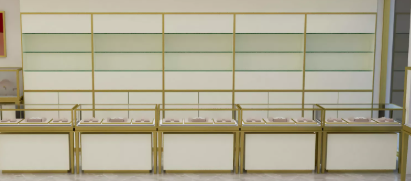
Designing a jewelry store counter showcase requires careful attention to several key elements. First, the showcase must provide security while offering clear visibility of the jewelry. This means using high-quality, tempered glass that is both durable and transparent. The shape and size of the showcase should fit the store layout, allowing customers to view items comfortably without overcrowding. Additionally, the materials used for the frame and base should complement the store's overall aesthetic—think sleek metals for modern stores or rich wood for classic styles. Storage space beneath the counter is also crucial for easy access to inventory without cluttering the display area.
Lighting integration is vital in showcasing jewelry effectively. The lighting should be built into the design rather than added later. For example, LED strip lights can be installed along the edges or under shelves to provide even illumination without visible fixtures. Spotlights or miniature LED downlights can highlight featured pieces, drawing customer attention. It's important to position lights to minimize glare and reflections on the glass, which can distract or obscure the jewelry. Using adjustable lighting fixtures allows flexibility to change focus and intensity depending on the collection or time of day. Wiring should be hidden within the showcase structure to maintain a clean, professional look.
Lighting does more than just illuminate; it enhances the aesthetic appeal of the jewelry and the showcase itself. Proper lighting brings out the sparkle and color of gems, making them more attractive. Warm light tones (around 3000K) enhance gold and warm gemstones, while cooler tones (5000K to 6500K) make diamonds and silver shine brilliantly. Combining ambient lighting with accent lighting creates depth and interest, making displays feel dynamic and luxurious. Using dimmable LEDs allows control over brightness, helping create a comfortable shopping atmosphere that encourages customers to linger. Moreover, lighting can be used creatively to guide customers’ eyes through the display, highlighting new arrivals or best-sellers.
Installing LED lighting in jewelry stores requires careful planning and execution to ensure the best display effect. Start by assessing the showcase dimensions and layout. Measure the height, width, and depth to determine the number and placement of LED fixtures. Plan the wiring routes to keep cables hidden and avoid clutter. Begin installation by mounting LED strips or spotlights inside or above the showcases, depending on your design. Use brackets, clips, or adhesive tapes designed for LEDs to secure fixtures firmly. Connect the fixtures to a suitable power supply, preferably low-voltage DC drivers for safety and efficiency. Test each light to confirm proper functioning before finalizing connections. Adjust angles and brightness to highlight jewelry pieces optimally. Finally, conceal wiring within the showcase structure or behind panels for a clean look.
Selecting the right LED fixtures is key to achieving stunning jewelry displays. Consider the type of lighting needed: LED strip lights provide even, diffuse illumination ideal for general showcase lighting. LED spotlights or downlights focus on specific pieces, enhancing sparkle and detail. For flexibility, choose fixtures with adjustable beam angles and dimmable features. Look for LEDs with a high Color Rendering Index (CRI) of 90 or above to accurately show jewelry colors. The color temperature should match the jewelry type—warm white (3000K) suits gold, while cool white (5000K–6500K) enhances diamonds and silver. Also, prioritize fixtures with good heat dissipation to protect delicate items and extend LED lifespan. Compact, low-profile designs help keep fixtures discreet.
LED lighting offers excellent energy efficiency, consuming up to 80% less power than conventional bulbs. This reduces electricity costs significantly over time. LEDs also have a long lifespan, often exceeding 25,000 hours, which minimizes maintenance and replacement frequency. To maintain optimal performance, regularly clean LED fixtures and lenses to prevent dust buildup that can dim light output. Inspect wiring and connections periodically for safety. Avoid overheating by ensuring proper ventilation around fixtures. Using dimmers and timers can further optimize energy use by adjusting brightness based on store hours and natural light conditions. Overall, LED lighting is a cost-effective, eco-friendly choice that enhances jewelry displays while lowering operational expenses.
Track lighting offers flexibility and precision in jewelry displays. Mounted on tracks, these fixtures can slide and swivel, allowing you to direct light exactly where needed. This adaptability helps highlight various pieces or sections without rewiring or repositioning fixed lights. For example, you might focus brighter beams on new collections or best-sellers while keeping ambient light softer elsewhere. Accent lighting, often using spotlights or small LED fixtures, adds depth by emphasizing specific jewelry pieces. It creates visual interest and guides customers’ eyes to key items. Combining track and accent lighting allows you to layer illumination—ambient, task, and accent—creating a rich, inviting display.
Dynamic lighting transforms a static showcase into an engaging experience. Techniques include using adjustable color temperatures, dimming controls, and programmable light patterns. For instance, a rotating LED spotlight can gently sweep over a diamond necklace, enhancing its sparkle and catching customer attention. Color temperature shifts—from warm to cool tones—can highlight different metals and gemstones throughout the day or during special promotions. Using dimmable LEDs lets you adjust brightness to match ambient light, preventing glare or dullness. These effects not only showcase jewelry’s beauty but also create moods that encourage browsing and buying.
Focusing light on individual pieces is key to drawing attention. Narrow beam angles from spotlights or pin lights work best for this purpose. Position lights slightly above and in front of jewelry to enhance brilliance and reduce unwanted shadows or reflections. For example, a diamond ring benefits from cool white light (around 6000K) focused sharply to bring out its fire and clarity. Gold pieces, on the other hand, glow best under warm white light (around 3000K). Using adjustable fixtures lets you fine-tune angles and intensity, ensuring each piece looks its best. Avoid placing lights too close, which can cause heat damage or glare, or too far, which dims sparkle.
Color temperature plays a huge role in how jewelry looks under light. Using the wrong temperature can make pieces appear dull or unnatural. For example, warm light (around 3000K) enhances gold's rich tones, while cool light (5000K–6500K) brings out diamonds' brilliance. Ignoring this can cause metals and gems to lose their sparkle or even look off-color. Mixing temperatures without planning creates a confusing visual effect, distracting customers. Always match color temperature to the jewelry type for the best presentation.
Uneven light distribution causes shadows and glare, hiding details or creating dark spots in displays. Jewelry needs consistent illumination to sparkle and show true colors. Narrow beams only on a few pieces leave others unnoticed. On the other hand, too wide beams can wash out details. Proper placement and using multiple light sources ensure uniform coverage. Adjustable fixtures help fine-tune light angles, avoiding reflections on glass surfaces that frustrate buyers.
Some stores overlook energy efficiency when choosing lighting. Conventional bulbs waste energy and generate heat, raising costs and risking jewelry damage. LEDs use up to 80% less power and produce minimal heat, protecting delicate items. They last much longer, reducing maintenance and replacement expenses. Ignoring these benefits leads to higher bills and extra work. Investing in energy-efficient LEDs pays off quickly and supports sustainability goals.
LED lighting surpasses conventional options for jewelry displays, offering energy efficiency, longevity, and better color accuracy. Jewelry showcases benefit from LED's low heat emission and flexible design. Prioritize LEDs for enhanced sparkle and reduced costs. Future trends may focus on dynamic effects and advanced controls. Jinxi Hongzhan Furniture Co., Ltd. provides innovative solutions that integrate LED lighting, ensuring stunning displays that highlight jewelry brilliance and attract customers effectively. Their products offer exceptional value through quality craftsmanship and design expertise.
A: LED lighting in a jewelry showcase offers energy efficiency, long lifespan, minimal heat emission, and excellent color accuracy, enhancing jewelry brilliance and reducing costs.
A: Jewelry store counter showcase design affects lighting by determining fixture placement, glare reduction, and complementary aesthetics, ensuring optimal jewelry visibility and appeal.
A: LED lighting is preferred for jewelry displays due to its superior energy efficiency, color accuracy, lower heat emission, and longer lifespan compared to conventional lighting options.


