
Views: 0 Author: Site Editor Publish Time: 2025-10-24 Origin: Site


A display cabinet goes by many names depending on where you are and what you're displaying. Most commonly, people call it a showcase, vitrine, display case, or exhibition cabinet. In jewelry stores, you'll hear it called a jewelry cabinet display, while antique collectors prefer the term curio cabinet. The French word "vitrine" appears frequently in upscale retail, and museums typically use "exhibition cabinet" or simply "display case." Understanding these different terms helps you communicate clearly with suppliers and find exactly what you need for your retail space or home collection.
Why does knowing the right terminology matter? When searching online for display solutions, using the correct terms dramatically affects your search results. Searching "vitrine" versus "showcase" returns completely different product options and suppliers. Professional retailers and collectors recognize quality differences between these categories, and manufacturers like HZdisplay design specialized versions for distinct purposes. Whether you're outfitting a jewelry boutique, bakery, museum, or private collection, understanding display cabinet terminology ensures you select the perfect fixture that matches your needs, budget, and aesthetic vision.
The terminology surrounding display cabinets varies significantly based on industry, geography, and specific function. What Americans call a display case, Europeans might refer to as a vitrine, and what works perfectly for jewelry won't suit bakery goods at all.
Showcase represents the most common American retail term. Walk into any mall jewelry store and staff will reference showcases when discussing their fixtures. This term emphasizes the cabinet's primary function—showing products to customers while keeping them secure. Retail environments from electronics stores to cosmetics counters use this straightforward terminology.
Vitrine comes from French and carries upscale connotations. High-end boutiques, luxury retailers, and European establishments prefer this elegant term. A glass display cabinet described as a vitrine suggests sophistication and premium positioning. Interior designers frequently use this term when specifying fixtures for upscale residential or commercial projects.
Display case serves as the most generic descriptor, applying broadly across industries. Museums, libraries, and educational institutions typically use this neutral term. It works equally well for standing floor units or countertop models, making it the safest choice when discussing fixtures with varied audiences.
Curio cabinet specifically describes home furniture designed to display collectibles, china, or decorative objects. These residential pieces typically feature glass on multiple sides, decorative wooden frames, and home-friendly aesthetics rather than commercial security features. Antique dealers and furniture retailers use this term exclusively for non-commercial applications.
Exhibition cabinet appears in museum, gallery, and institutional contexts. These specialized units prioritize conservation, security, and professional presentation over retail concerns. Climate control, UV-filtered glass, and artifact preservation features distinguish exhibition cabinets from commercial showcases.
Regional terminology differences create confusion for international buyers. British English speakers say "display cabinet" where Americans might use "showcase." Asian markets often adopt English terms directly but may add local descriptors. Understanding these variations helps when sourcing from international manufacturers or communicating with global suppliers.
Industry-specific terms add another layer of complexity. Jewelers discuss jewelry cabinet display units with specialized features like ring rolls, necklace busts, and watch pillows. Bakeries require Bakery Display Cabinet designs with different ventilation, humidity control, and accessibility features than jewelry fixtures. Each specialized term signals distinct functional requirements that generic "display cabinet" doesn't capture.
Display cabinets divide into three primary categories based on intended use, each with distinct construction, features, and design priorities.
| Cabinet Category | Primary Use | Key Features | Typical Materials | Security Level |
|---|---|---|---|---|
| Retail Display Cabinets | Commercial product sales | Locking mechanisms, integrated lighting, accessible layouts | Tempered glass, aluminum frames, LED systems | High - theft prevention critical |
| Museum Exhibition Cabinets | Artifact preservation and display | Climate control, UV protection, conservation-grade materials | Low-iron glass, sealed construction, archival interiors | Maximum - irreplaceable items |
| Home Curio Cabinets | Personal collections, decorative display | Aesthetic design, furniture-grade finish, open shelving options | Wood frames, standard glass, decorative hardware | Low - security less critical |
Retail display cabinets serve commercial environments where products must look appealing while remaining secure. These units balance accessibility for staff with protection from theft. Features include sliding rear doors for quick product access, adjustable shelving to accommodate varied merchandise, and integrated LED lighting that enhances product appeal. Materials emphasize durability—tempered glass resists breakage, powder-coated aluminum frames withstand daily use, and commercial-grade locks provide security without complicated operation.
Jewelry retailers require specialized custom jewelry cabinet display solutions with features standard showcases lack. Ring slots, necklace stands, watch pillows, and bracelet bars organize specific product types elegantly. Manufacturers like HZdisplay's jewelry display cabinets incorporate these specialized components into elegant frameworks with high-strength glass panels and solid wood or metal frames that combine security with sophisticated aesthetics.
Museum exhibition cabinets prioritize preservation over sales. These specialized units protect irreplaceable artifacts from environmental damage, light exposure, and human contact. Features include sealed construction maintaining stable humidity levels, UV-filtered glass preventing light damage, and inert materials that won't off-gas chemicals harmful to sensitive objects. Museums invest significantly more in exhibition cabinets than retailers spend on showcases because the contents require conservation-grade protection for decades or centuries.
Home curio cabinets emphasize aesthetics and furniture quality over commercial concerns. These residential pieces complement home décor while displaying cherished collections. Wood species selection, finish quality, and decorative details matter more than theft prevention. Many curio cabinets feature glass on three or four sides for maximum visibility, mirrored backs to enhance depth, and adjustable glass shelves on nearly invisible supports. Unlike commercial units built for durability, home curios prioritize beauty and style coordination with existing furniture.
The boundaries between categories blur in some applications. High-end jewelry boutiques might commission museum-quality exhibition cabinets for displaying heritage pieces or extremely valuable items. Serious collectors sometimes install commercial-grade security showcases in homes protecting valuable collections. Understanding these category distinctions helps you identify which type truly matches your needs rather than defaulting to whatever terminology you first encounter.
Different products demand distinctly different display approaches. A cabinet perfect for diamond rings creates disaster for croissants, and bakery cases ruin jewelry presentation. Understanding specialized display categories ensures you select fixtures matching your specific merchandise.
Jewelry display requirements center on security, lighting, and elegant presentation. Valuable merchandise demands robust protection—tempered glass construction, reliable locking mechanisms, and sometimes alarm integration. Lighting proves equally critical because proper illumination creates the sparkle and fire that makes gemstones irresistible. LED systems with high color rendering index (CRI 90+) accurately represent metal tones and gemstone colors without distortion.
The best jewelry cabinet display designs incorporate adjustable components accommodating varied inventory. Removable trays with velvet linings present rings elegantly, acrylic risers create height variation for visual interest, and specialized forms display necklaces, bracelets, and watches optimally. Professional jewelers invest in modular systems allowing seasonal reconfiguration as inventory changes without replacing entire fixtures.
Bakery Display Cabinet solutions prioritize completely different factors. Food safety regulations require materials meeting health department standards—food-grade surfaces, easy cleaning access, and proper ventilation preventing moisture accumulation. Unlike jewelry cases that seal tightly, bakery cabinets need airflow preventing condensation that makes pastries soggy. Many designs incorporate rear doors allowing staff to restock from behind while customers view products through front glass without contamination concerns.
Temperature control distinguishes refrigerated bakery cases from ambient displays. Refrigerated units maintain specific temperature ranges preserving cream-filled pastries, cakes with buttercream frosting, and other perishables. Ambient cases suit breads, cookies, and items better served at room temperature. Some bakeries use hybrid systems with both refrigerated and ambient zones in unified displays.
Bread display cabinets specifically often feature wire basket systems rather than solid shelves, promoting airflow that keeps crusts crisp. Bakeries displaying artisan breads want customers seeing full loaves rather than pre-sliced packages, requiring deeper shelves and open accessibility that would horrify jewelry retailers concerned about theft.
Custom jewelry cabinet display projects allow retailers to specify exact dimensions, materials, finishes, and features matching their unique brand identity and space constraints. Customization ranges from simple color selection on standard models to completely bespoke designs incorporating unusual materials, integrated technology, or architectural elements coordinating with overall store design. While custom fabrication costs more than stock units, the differentiation and perfect fit justify investment for established retailers building distinctive brand experiences.
Specialized applications extend beyond jewelry and food. Watch retailers need cabinets with watch winders keeping automatic timepieces operational during display. Eyewear requires angled shelves presenting frames face-forward. Electronics showcases incorporate charging stations and working demonstration units. Each specialty demands thoughtful feature selection rather than generic display solutions.
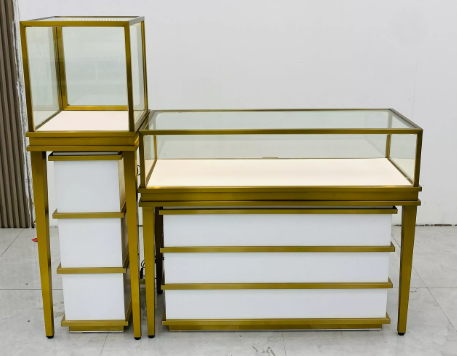
Material selection dramatically affects display cabinet performance, longevity, and aesthetic appeal. Understanding material properties helps you choose wisely based on your specific application and budget.
Glass types and quality levels vary significantly in display applications. Standard plate glass costs least but scratches easily, shatters dangerously, and lacks the clarity premium applications demand. Tempered glass undergoes heat treatment creating internal stresses that make it four to five times stronger than standard glass. When broken, tempered glass crumbles into small granular chunks rather than dangerous shards, providing crucial safety advantages.
Low-iron glass eliminates the greenish tint visible in standard glass edges, providing crystal clarity particularly valuable in high-end jewelry and museum applications. Anti-reflective coatings reduce glare by 60-80%, ensuring customers see displayed products rather than reflections of store lighting or themselves. UV-filtering glass protects light-sensitive materials from fading and deterioration, essential for textiles, artwork, and archival materials.
Wood frame construction brings warmth, traditional elegance, and furniture-quality aesthetics to display cabinets. Solid hardwoods like oak, maple, and walnut provide durability and rich appearance aging beautifully over decades. Veneer construction over engineered wood cores offers similar aesthetics at lower cost while providing dimensional stability superior to solid wood in changing humidity conditions.
Wood finishes range from natural oils highlighting grain patterns to opaque painted surfaces in any color imaginable. Commercial retailers often prefer darker woods or black finishes creating dramatic contrast that makes displayed jewelry pop visually. Home curio cabinets typically match existing furniture finishes, requiring careful wood species and stain selection.
Metal framing systems dominate modern commercial display applications. Aluminum extrusions provide strength without excessive weight, accept powder-coat finishes in unlimited colors, and resist corrosion in humid environments. Steel frames offer maximum strength for large installations but require proper finishing preventing rust. Some high-end fixtures use brass or bronze frames creating luxurious traditional aesthetics.
Metal frames enable slimmer profiles than wood equivalents because metal's superior strength requires less material achieving comparable structural performance. This allows larger glass areas and less visual obstruction, particularly valuable in jewelry applications where maximum product visibility drives sales.
Combination approaches integrate multiple materials exploiting each material's strengths. A glass display cabinet might feature metal structural framing for strength, wood trim panels for warmth, and glass shelving for transparency. These hybrid constructions allow designers balancing aesthetic appeal with functional performance and budget constraints.
Interior surface materials matter equally. Velvet and felt-covered trays present jewelry elegantly while preventing scratching. Stainless steel surfaces suit food applications requiring sanitation. Mirrored backs create depth illusion and additional viewing angles. Acrylic components offer transparency without glass weight and fragility. Professional manufacturers select materials appropriate to specific applications rather than defaulting to standard solutions.
Choosing the right display cabinet requires matching features and specifications to your specific needs, space, and budget. Following a systematic selection process prevents costly mismatches.
Define your primary purpose clearly. Are you displaying merchandise for sale, protecting collectibles, showcasing achievements, or presenting food products? This fundamental question determines appropriate security levels, material choices, and feature priorities. A jeweler's needs differ completely from a baker's requirements, and attempting one-size-fits-all solutions satisfies neither application adequately.
Measure your available space accurately. Note ceiling heights, floor space dimensions, electrical outlet locations, and any architectural constraints like columns or HVAC vents. Consider traffic flow—displays shouldn't create bottlenecks forcing customers into uncomfortable proximity. Allow adequate clearance for doors opening and maintenance access to cabinet interiors and lighting systems.
Assess security requirements realistically. High-value inventory justifies investment in tempered glass, commercial-grade locks, and possibly alarm integration. Home collections of modest value need less elaborate protection. Balance security with accessibility—overly complicated systems frustrate staff and slow customer service during busy periods.
Evaluate lighting needs carefully. Jewelry and gemstones demand high-quality lighting creating sparkle and accurately representing colors. Some collectibles require UV-filtered lighting preventing fading. Food displays need lighting that makes products appetizing without generating heat that spoils perishables. Consider whether integrated lighting or external illumination better suits your application and budget.
Consider adjustability and flexibility. Merchandise changes seasonally and inventory evolves over time. Display cabinets with adjustable shelving, removable components, and modular design adapt to changing needs without requiring replacement. Fixed configurations save initial costs but may prove limiting as your business or collection grows.
Budget appropriately for quality. Entry-level display cabinets start around several hundred dollars for basic home curio models. Commercial jewelry cabinet display units range from mid-tier to premium depending on size, materials, and features. Museum-quality exhibition cabinets represent significant investments justified by irreplaceable contents. Remember that quality cabinets last decades while cheap units need replacement within years, making lifecycle costs favor higher initial investment.
Investigate manufacturer reputation and support. Established manufacturers like HZdisplay provide design assistance, customization options, and post-purchase support that budget suppliers can't match. Review warranty terms, replacement part availability, and customer service accessibility before committing to significant purchases.
Request samples or visit showrooms when possible. Photos don't convey material quality, construction solidity, or finish details accurately. Seeing and touching display cabinets before purchasing prevents disappointment and ensures expectations match reality.
Plan for installation and maintenance. Large display cabinets require professional installation ensuring structural stability and proper electrical connections. Consider ongoing maintenance requirements including glass cleaning, lighting replacement, and hardware lubrication when evaluating long-term ownership costs.
Display cabinet design evolves continuously as technology advances and sustainability concerns reshape manufacturing priorities. Understanding current trends helps you select fixtures remaining relevant for years ahead.
Integrated LED lighting systems have become standard in quality display cabinets. Modern LED technology provides brilliant illumination using minimal electricity while generating little heat that could damage displayed items. Color-tunable LED systems allow adjusting color temperature from warm to cool tones depending on merchandise and desired ambiance. Some advanced systems include dimming controls and programmable lighting sequences creating dynamic displays that change throughout the day.
Smart technology integration brings connectivity and control to display cabinets. Electronic locks controlled by smartphone apps allow managers granting and revoking access remotely without physical key management. Integrated security cameras stream video to mobile devices, enabling real-time monitoring from anywhere. Environmental sensors track temperature and humidity levels, triggering alerts when conditions drift outside acceptable ranges for sensitive collectibles.
Digital display screens embedded in cabinet frames show product information, pricing, and promotional content that updates instantly without printing new signage. Some jewelry retailers incorporate tablets into displays allowing customers exploring product details, viewing pieces being worn in lifestyle photos, and even virtually trying items using augmented reality technology.
Sustainable materials and manufacturing respond to growing environmental consciousness among consumers and retailers. Manufacturers increasingly use recycled aluminum, reclaimed wood, and low-VOC finishes reducing environmental impact. Energy-efficient LED lighting and improved insulation in refrigerated cases lower operational electricity consumption significantly compared to older technologies.
Some forward-thinking manufacturers offer take-back programs accepting old display cabinets for refurbishment and resale or responsible recycling, keeping materials out of landfills. Modular designs enable replacing outdated components without discarding entire cabinets, extending useful life while adapting to changing needs.
Minimalist design aesthetics dominate contemporary display cabinets. Slim metal frames, frameless glass construction, and understated hardware create clean modern appearances letting displayed products command full attention. This departure from ornate traditional designs particularly suits luxury retail environments where distraction-free presentation allows merchandise speaking for itself.
Customization capabilities expand as manufacturing technology advances. CNC machining, laser cutting, and digital printing enable economical customization previously requiring expensive hand fabrication. Retailers create distinctive branded displays incorporating logos, custom colors, and unique dimensions that differentiate their stores from competitors using stock fixtures.
Antimicrobial surfaces gained prominence following pandemic concerns about contamination transmission. Some manufacturers now offer antimicrobial powder-coat finishes and treated glass that inhibits bacterial growth on frequently touched surfaces. This innovation particularly benefits food display applications where sanitation remains paramount.
Q1: What's another name for a display cabinet?
Display cabinets go by several different names depending on context and region. The most common alternatives include showcase (American retail term), vitrine (French term used in upscale contexts), display case (generic descriptor), curio cabinet (home furniture for collectibles), and exhibition cabinet (museum terminology). Jewelry retailers specifically use jewelry cabinet display or jewelry showcase, while bakeries refer to Bakery Display Cabinet units. These terms are largely interchangeable, though subtle connotations differ—vitrine suggests luxury positioning while display case remains neutral and broadly applicable across industries.
Q2: What are the three types of cabinets?
The three main cabinet categories based on primary function are retail display cabinets (commercial showcases for merchandise sales with security features and accessibility), museum exhibition cabinets (preservation-focused units with climate control and UV protection for artifacts), and home curio cabinets (furniture-grade pieces for personal collections emphasizing aesthetics over security). These categories can be further divided by structure into freestanding floor cabinets, countertop cases, and wall-mounted units. Material-based classification includes glass display cabinet models with metal or wood frames, solid wood furniture pieces, and specialized constructions like refrigerated food cases.
Q3: What is the difference between a curio and a display cabinet?
A curio cabinet specifically describes residential furniture designed for displaying personal collections, decorative objects, or china in home environments. These pieces prioritize aesthetic appeal, furniture-quality construction, and decorative details matching home décor. Display cabinet serves as a broader term encompassing both commercial showcases and home curios, applicable to retail fixtures, museum cases, and residential furniture. The key distinction lies in intended use and construction priorities—curios are furniture first and displays second, while commercial display cabinets prioritize security, durability, and merchandise presentation over decorative furniture characteristics.
Q4: What is a glass display cabinet called?
A glass display cabinet can be called a vitrine (especially in upscale retail and European contexts), glass showcase, display case, or simply a showcase depending on region and industry. When glass forms the primary visible material with minimal framing, the term vitrine particularly applies because it derives from the French word for glass or window. Commercial retailers typically say glass showcase or simply showcase, while museums use glass display case or exhibition cabinet. The specific terminology matters less than understanding that these terms all describe cabinets with transparent glass panels allowing viewing displayed contents from outside the enclosed space.
Q5: What is the difference between a display case and a display cabinet?
Display case and display cabinet are largely synonymous terms with subtle usage differences. Display case often refers to smaller countertop units or individual enclosed compartments, while display cabinet typically describes larger freestanding floor units with multiple shelves. In practice, most people use these terms interchangeably. Some retailers distinguish cases as horizontal countertop showcases customers view from above, while cabinets are vertical units with front-facing glass panels. Neither convention applies universally, making context more important than strict terminology. When communicating with suppliers, describe your specific needs rather than assuming precise terminology distinctions.
Q6: What do museums call their display cabinets?
Museums typically use exhibition cabinet, display case, or showcase when referring to their display fixtures. Conservation-grade cases protecting particularly sensitive artifacts might be called museum cases or archival display cabinets. The terminology emphasizes preservation function over sales presentation since museums protect irreplaceable objects rather than promoting merchandise purchases. Museum professionals often specify technical features like UV-filtered glass, climate control capabilities, and security ratings rather than using generic display cabinet terminology. When sourcing museum-quality fixtures, request exhibition-grade or conservation-grade specifications ensuring appropriate protection levels for valuable or sensitive collections.
Q7: How do I choose the right display cabinet for jewelry?
Selecting the optimal jewelry cabinet display requires evaluating several key factors: security level matching inventory value (tempered glass and reliable locks for valuable pieces), lighting quality with high CRI LEDs creating sparkle and accurate color representation, adjustable interior components accommodating varied jewelry types, appropriate size for your space and inventory volume, and aesthetic design complementing your brand identity. Consider whether stock configurations meet your needs or if custom jewelry cabinet display solutions better serve unique requirements. Reputable manufacturers like HZdisplay offer design consultation helping you specify ideal features, materials, and dimensions for your specific application and budget, ensuring your investment delivers both security and sales performance.
Understanding display cabinet terminology and types empowers you making informed decisions whether outfitting a retail store, establishing a museum exhibition, or creating an elegant home display for cherished collections. The right fixture protects your valuable items while presenting them beautifully, creating positive impressions that enhance perceived value and appreciation. By matching cabinet features to your specific needs rather than defaulting to generic solutions, you ensure your display investment delivers lasting satisfaction and performance for years ahead.


