
Views: 0 Author: Site Editor Publish Time: 2026-10-26 Origin: Site


Every high-value display unit carries a dual mandate. It acts as an invisible stage for merchandise while serving as an impenetrable vault against theft. This applies to bustling retail environments and private home collections alike. Poorly specified cabinets cause severe operational friction. Sales momentum dies when associates leave the floor to retrieve backstock. Inadequate security features introduce massive liability risks. Improper long-term storage damages delicate pieces through oxidation and scratching. You need a systematic evaluation process to solve these structural issues.
Choosing the right jewelry display cabinet with storage requires a careful balance. You must weigh aesthetic visibility against operational ergonomics. Glass and lighting showcase the product brilliantly, while drawers and locks protect the underlying investment. Evaluate these physical factors thoroughly before committing to a standard model or a specific manufacturer. A well-designed cabinet streamlines daily workflows while securing your most valuable assets.
Operational Efficiency: Integrated storage directly impacts sales velocity by keeping high-demand inventory, alternative sizes, and packaging securely within arm's reach of the sales floor.
Security is Multi-Layered: A true lockable jewelry display cabinet relies on a combination of shatter-resistant glass, tamper-proof hinges, and commercial-grade locking mechanisms, not just a single keyhole.
Lighting Dictates Presentation: The choice of integrated lighting (color temperature and heat output) must align with the specific metals and gemstones being displayed to prevent damage and maximize brilliance.
Custom vs. Standard Trade-offs: While prefabricated units offer speed and lower upfront costs, custom builds provide exact spatial optimization, structural stability, and brand alignment for long-term retail environments and high-end personal collections.
Establish baseline requirements based on the specific physical environment. High-traffic retail stores demand extreme durability and rapid access. Constant door cycling requires heavy-duty hardware that can withstand thousands of pulls per week. Private showrooms prioritize ambient lighting and luxurious exterior finishes over rapid transaction speed. High-end home collections often transition from soft pouches to structured displays, requiring entirely different internal layouts. Each setting dictates different material choices and security levels. You must define the primary daily function before looking at aesthetic designs. Assess the daily foot traffic volume. Determine the average transaction time per customer. Understand exactly how often pieces will be handled by staff. This initial assessment prevents costly specification errors during the build phase.
A jewelry display cabinet with drawers provides absolute functional necessity on the sales floor. Lower-level concealed storage enables seamless inventory management. Associates can access ring sizers, loupes, and microfiber cleaning cloths instantly. They can secure customer repairs in designated envelopes without leaving the immediate interaction zone. This physical proximity keeps the customer fully engaged. It prevents the awkward pause of walking to a backroom safe while a high-value item sits exposed on the counter. Integrated storage transforms a simple glass box into a comprehensive operational workstation. Drawers keep bulky packaging materials hidden but immediately accessible. This streamlines the final closing steps of any sale, allowing staff to box and bag items fluidly.
Baseline security expectations for high-value merchandise are non-negotiable. The cabinet acts as your absolute first line of physical defense. It must deter opportunistic smash-and-grabs during business hours. It also needs to prevent sophisticated internal shrinkage. Relying on basic cam locks leaves your inventory vulnerable to simple picking tools. You need reinforced steel frames and specialized safety glass that resists blunt force trauma. Access protocols must be strict, trackable, and reliable. Security features should integrate seamlessly without ruining the visual aesthetic. A robust physical defense system protects both the inventory and the floor staff from harm, creating a secure working environment.
Cabinet dimensions must align perfectly with the specific product type you intend to display. Deep storage drawers accommodate bulky watch winders, large cuff boxes, and rigid necklace folders. Shallow, wide drawers suit flat necklace trays and velvet ring pads. Mismatching storage capacity to product size causes daily operational chaos. Delicate gold chains tangle in oversized, unpartitioned compartments. Large statement pieces get crushed when staff force shallow drawers closed. Measure your standard packaging and display trays first. Ensure the internal clearance accommodates these exact physical dimensions. Proper matching prevents inventory damage and keeps backstock highly organized for rapid retrieval.
Standard retail configurations serve different strategic merchandising purposes. Full-view cases maximize visible display space from top to bottom. They often double as primary transaction counters, featuring multiple glass shelves. Half-view cases split the difference effectively. They offer generous upper display volume alongside substantial solid base storage. Quarter-view cases prioritize maximum concealed storage capacity. They feature a shallow glass top strictly for select highlights, keeping the focus on a few premium pieces. Choose the configuration based on your specific inventory-to-display ratio. A high-volume jewelry store display cabinet layout often utilizes a strategic mix of these profiles to guide customer attention.
A 360-degree glass jewelry display cabinet serves as a striking focal point in any room. These freestanding towers highlight high-ticket statement pieces effectively. They draw customers deep into the store floor plan. However, they possess inherent physical storage limitations. The small footprint severely restricts base cabinet volume. Pedestals work best for single-item features or small curated collections. They require supplementary storage units nearby for packaging and backstock. Use them sparingly to create visual interest without sacrificing overall operational efficiency. Ensure freestanding units have weighted bases to prevent tipping hazards in high-traffic areas.
Space-saving designs utilize vertical real estate highly effectively. Wall-mounted units free up valuable floor space. They keep aisles clear and maintain strict ADA compliance. However, heavy storage-equipped wall cases require serious structural support. You must anchor them directly to heavy-gauge wall studs or concrete using heavy-duty French cleats. Shadow boxes create intimate viewing experiences for smaller collections. They work exceptionally well for eye-level engagement. Ensure the mounting hardware exceeds the fully loaded weight of the cabinet by a wide margin to prevent catastrophic failure.
Modular units combine to create highly secure physical perimeters. Island configurations facilitate smooth customer flow around the merchandise. They centralize staff operations and storage in one protected hub. This setup allows multiple associates to work simultaneously without crossing paths constantly. Cash wraps integrate point-of-sale systems with secure displays. They keep high-impulse items visible during the final checkout process. Proper island design minimizes visual blind spots on the floor. It maximizes both security monitoring and sales opportunities by keeping staff facing outward toward the entrance.
Aesthetically driven units blend high security with refined interior design. Brass and glass display cabinets elevate the entire visual environment. They suit boutique retail spaces and luxury residential settings perfectly. These cabinets transition private collections from hidden safes to visible showcases. They incorporate residential finishes like wood veneers, custom fabrics, and decorative molding. Yet, they maintain commercial-grade security features underneath the surface. This hybrid approach satisfies both interior decorators and security professionals, proving that heavy-duty protection does not require an industrial appearance.
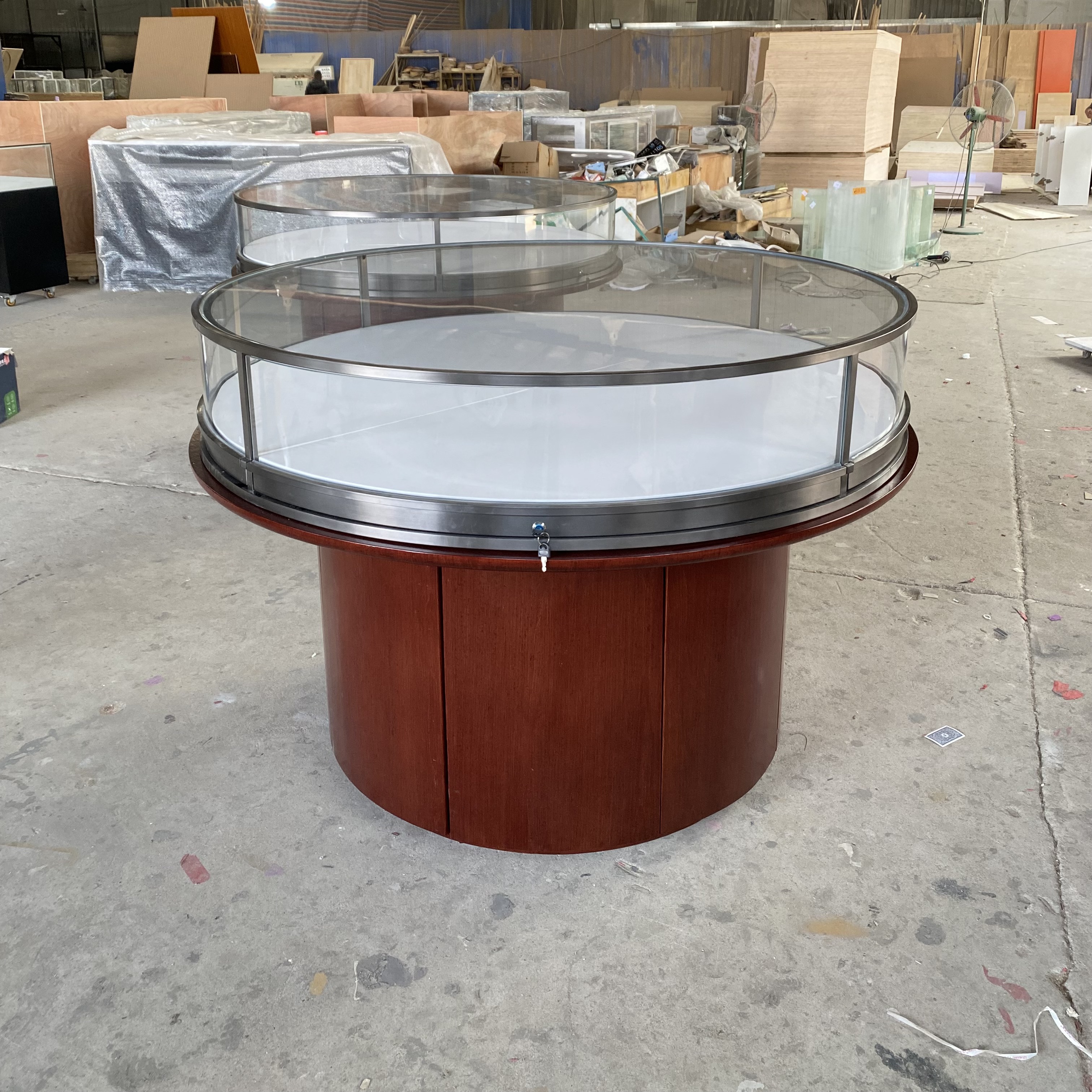
Standard tempered glass is safe but shatters into small cubes upon heavy impact, leaving the contents immediately exposed. Laminated safety glass holds together even when severely broken. A polyvinyl butyral (PVB) interlayer keeps the shattered pieces bonded. This provides a physical delay against smash-and-grab attempts, forcing thieves to abandon the effort. Anti-reflective coatings eliminate harsh glare and allow the jewelry to shine without mirror-like reflections. Ultra-clear low-iron glass removes the standard green tint found in regular glass. This ensures diamonds and gemstones display their true, accurate colors under the lights.
Glass Type | Security Level | Visual Clarity | Best Application |
|---|---|---|---|
Standard Tempered | Low (Shatters completely) | Good (Slight green tint) | Low-risk interior shelving |
Laminated Safety | High (Holds together on impact) | Good (Slight green tint) | Exterior display panels, high-risk areas |
Low-Iron Tempered | Low (Shatters completely) | Excellent (No color distortion) | Diamond and fine gemstone displays |
Low-Iron Laminated | High (Holds together on impact) | Excellent (No color distortion) | Premium retail storefronts and islands |
Evaluate the durability of the frame materials carefully. Wood veneer over medium-density fiberboard (MDF) offers a classic, warm aesthetic for traditional spaces but requires careful handling to prevent edge chipping. Stainless steel provides modern, rigid support for heavy glass panels and resists scratching. Anodized aluminum balances overall weight and structural strength well, making it ideal for modular setups. Avoid thin materials that cause wobble or weakness. Freestanding units must remain absolutely stable when heavy doors open. A shifting frame will eventually crack the glass panels due to uneven torsion.
Traditional plunger locks offer basic security for sliding glass doors. Cam locks secure hinged doors and lower storage drawers. A modern lockable jewelry display cabinet often utilizes RFID or smart-lock systems. These electronic locks track access history meticulously. They allow rapid entry for staff using keycards or fobs while keeping thieves out. Smart locks eliminate the risk of lost physical keys and the subsequent need to rekey entire store sections. They also auto-lock upon closure, removing human error from the security equation.
Security extends far beyond the lock itself. Concealed hinges prevent tampering from the outside using screwdrivers or pry bars. Reinforced sliding tracks stop thieves from lifting doors off their runners. Anti-lift mechanisms are absolutely mandatory for any sliding glass panel. Address these hardware vulnerabilities to ensure comprehensive physical protection. Weak hinges negate the strongest glass and the best locks. Ensure all strike plates are reinforced with heavy-gauge steel backing to prevent forced entry.
Heavy-duty drawer glides are absolutely necessary. Concentrated weight from loaded jewelry trays will destroy cheap hardware quickly. Specify soft-close, full-extension ball-bearing glides. They prevent tipping and jamming during rapid daily access. Smooth mechanics protect delicate inventory from sudden jolts that could dislodge stones. Drawers should support at least 100 pounds of dynamic weight. Undermount slides provide a cleaner aesthetic when the drawer is open, while heavy-duty side-mount slides offer maximum load capacity for deep backstock drawers.
Modular velvet or faux-leather inserts keep pieces physically separated. Adjustable shelving within the storage base accommodates changing inventory sizes. Anti-tarnish fabrics are vital for the long-term storage of silver. These specialized cloths contain microscopic silver particles that absorb sulfur gases before they reach your inventory. Custom fabrics and silver trays create beautiful aesthetic backdrops. This internal organization differentiates your brand presentation. It also prevents delicate chains from knotting together during transit from the drawer to the display deck.
LED lighting is mandatory for modern display setups. Low heat emission prevents damage to sensitive organic materials. Pearls, opals, and delicate antique pieces degrade rapidly under hot halogen bulbs. LEDs offer superior longevity and massive energy efficiency. They require far less maintenance over the cabinet's lifespan. Proper heat sinks must be integrated into the light housings to dissipate the minimal heat LEDs do produce, ensuring the diodes reach their maximum rated lifespan.
Match your lighting to your specific inventory. Incorrect color temperature makes premium jewelry look dull and lifeless. High Color Rendering Index (CRI) ratings above 90 ensure accurate color representation across the entire spectrum.
Jewelry Type | Recommended Kelvin Range | Visual Effect |
|---|---|---|
Diamonds & Platinum | 4500K - 6000K (Cool White) | Enhances brilliance and icy clarity. |
Yellow Gold | 3000K - 3500K (Warm White) | Brings out rich, warm metallic tones. |
Colored Gemstones | 3500K - 4000K (Neutral White) | Provides balanced, accurate color rendering. |
Mixed Inventory | 4000K (Daylight) | Offers a versatile middle ground for varied displays. |
Combine overhead strip lighting with adjustable micro-spotlights. Ambient strips eliminate harsh shadows across the entire display deck, providing an even wash of light. Directional spotlights create dramatic sparkle on individual faceted stones. This dual approach maximizes visual impact. It ensures every piece receives the exact illumination it requires. Position spotlights at a slight angle facing the customer to maximize the return of light from the diamond facets directly into the viewer's eye.
Standard models suit specific operational scenarios perfectly. Tight timelines often dictate prefabricated choices. Pop-up shops and temporary exhibitions benefit from quick deployment. Beginner setups with strict budget constraints rely heavily on off-the-shelf units. However, standard units have distinct physical limitations. They rarely match exact brand colors or specific architectural finishes. They cannot adapt to unique or challenging floor plans, often leaving awkward gaps or dead spaces in the retail environment.
Commissioning a custom jewelry display cabinet unlocks precise physical control. You can engineer specific storage-to-display ratios based on your exact inventory data. A specialized jewelry display cabinet manufacturer integrates proprietary security tech seamlessly during the fabrication process. They match architectural millwork to your exact brand style, ensuring consistency across multiple store locations. Custom builds optimize every inch of available retail space. They provide structural stability tailored to your specific merchandise weight, ensuring doors and drawers operate flawlessly for decades.
Over-specifying cabinet size creates massive operational bottlenecks. You must maintain ADA-compliant aisles at all times. Standard aisles require a minimum of 36 inches of clearance, but 42 to 48 inches is preferable for high-traffic retail. Ensure staff have adequate physical clearance behind the counters. They must open storage drawers fully without blocking walkways or hitting the wall behind them. Cramped spaces lead to dropped merchandise and frustrated employees. Tape out the exact physical dimensions on your floor before ordering to verify spatial flow.
Powering integrated lighting and smart locks presents serious logistical challenges. Floor core drilling is often necessary for central island configurations to bring power up from below. Concealed wire routing keeps the aesthetic clean and professional. Dedicated electrical circuits prevent overloads and tripping hazards. Visible cables ruin the luxury presentation of high-end jewelry. Plan your electrical layout meticulously before finalizing cabinet placement. Ensure all internal wiring is housed in protective conduit to prevent pinching when drawers open and close.
Receiving heavy, fragile freight involves significant logistical hurdles. Verify if the manufacturer provides specialized installation services. Determine if units ship fully assembled or flat-packed. Flat-packed units require highly skilled labor for on-site glass setting. Mishandling during installation causes permanent frame damage or glass breakage. Hire experienced contractors who specialize in retail fixture installation.
Verify all site dimensions and electrical stub-out locations before the delivery truck arrives.
Uncrate the cabinets carefully, inspecting all glass panels and wood finishes for freight damage immediately.
Level the base cabinets using heavy-duty shims to ensure doors and drawers operate without binding.
Set the glass panels into the tracks, securing them with the manufacturer's specified silicone or mechanical fasteners.
Connect all internal wiring to the floor power supply and test every LED strip and electronic lock.
Measure your available floor space and map out customer flow patterns to determine maximum cabinet footprints.
Calculate your required backstock storage volume based on your specific product packaging dimensions.
Consult your insurance provider to verify required security tiers and lock grades for your inventory value.
Request physical material samples and lighting specification sheets from shortlisted manufacturers.
Finalize your electrical floor plan to ensure seamless power integration for lighting and smart locks.
A: Laminated safety glass is the premier choice for physical security. It holds together upon impact, delaying smash-and-grab attempts. For maximum color accuracy and brilliance, ultra-clear low-iron tempered glass is excellent. It removes the green tint found in standard glass, ensuring diamonds and gemstones display their true colors.
A: Standard storage drawers typically measure 18 to 22 inches deep. This dimension perfectly accommodates standard industry jewelry trays and presentation pads. If you stock bulky items like luxury watch boxes or large cuff packaging, you will need custom depths exceeding 24 inches to prevent jamming.
A: Yes, but retrofitting presents physical challenges. Adding aftermarket LEDs requires careful wire concealment to maintain a clean look. You must also manage heat dissipation to protect delicate inventory. It often requires drilling through existing frames, which can compromise the cabinet's structural integrity if done improperly.
A: The difference lies in the glass-to-storage ratio. A full-view case features glass down to the base, maximizing display area and doubling as a transaction counter. A half-view case splits the unit horizontally. It features a top glass display section and a solid, secure storage cabinet underneath.
A: Yes, many commercial insurance policies dictate strict physical security standards. They often require specific commercial-grade lock ratings, shatter-resistant laminated glass, and anti-lift tracks. For overnight storage, policies may also mandate integrated alarm sensors on the cabinet doors. Always consult your underwriter before purchasing display fixtures.
A: Transitioning to cabinet storage requires strict environmental control. Line your drawers with specialized anti-tarnish cloth. Use silica gel packets to control ambient moisture, which accelerates oxidation. Ensure the storage section features airtight seals on the doors and drawers to minimize exposure to sulfur and humidity.
A: Always use non-ammonia glass cleaners. Ammonia strips away anti-reflective coatings and damages metal frame finishes over time. Apply the cleaner to a microfiber cloth first, never spray directly onto the glass. This prevents liquid from seeping into the frame joints or dripping onto the jewelry inside.


